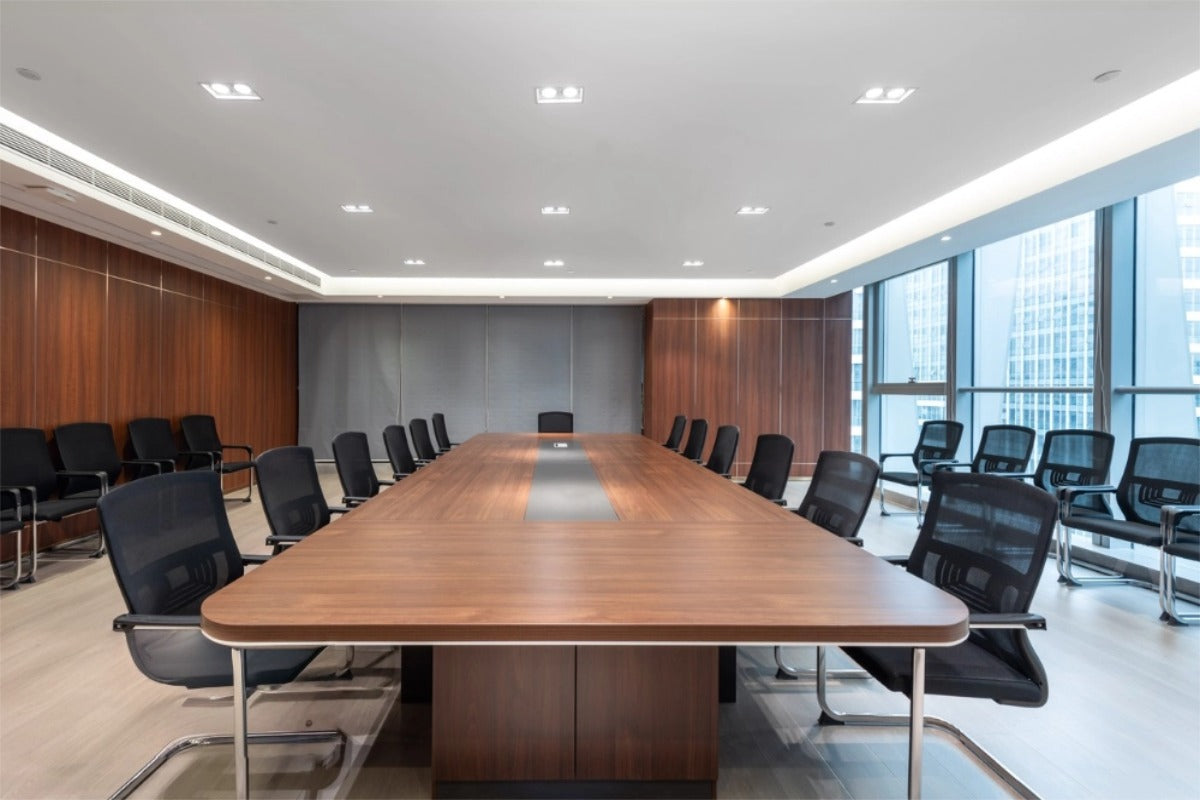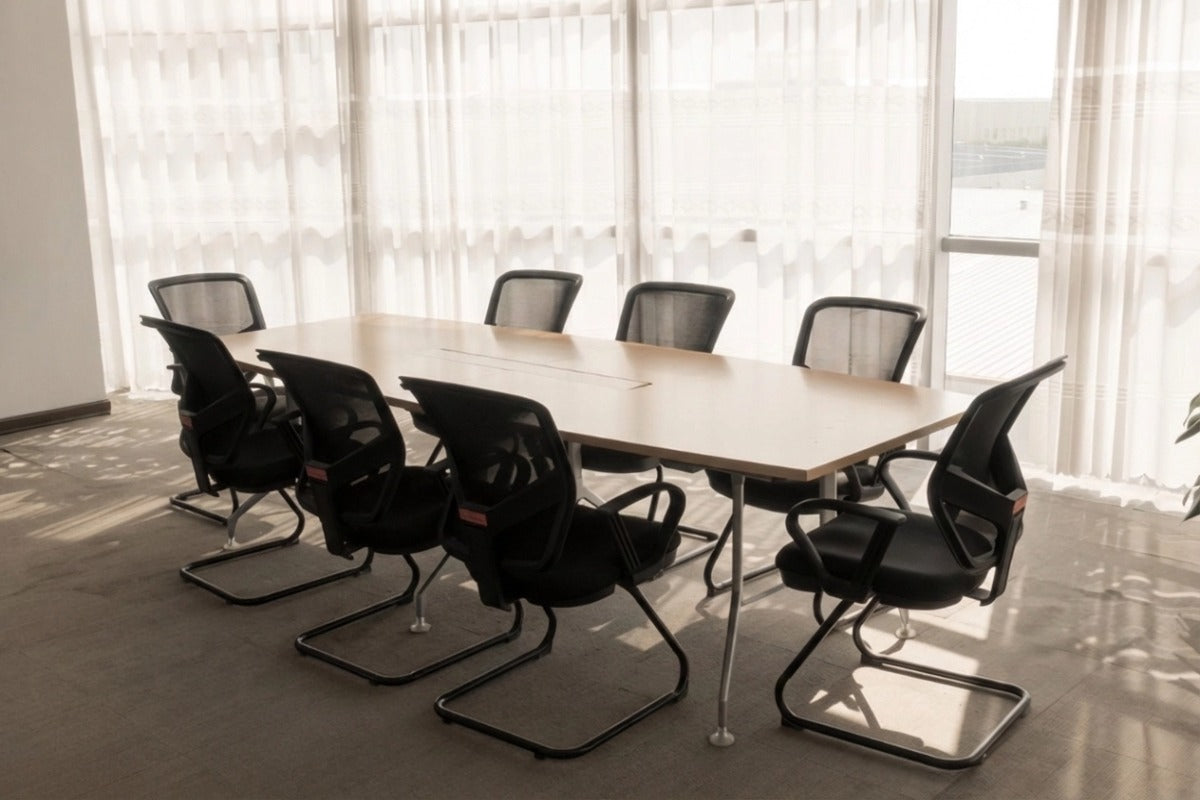
Choosing a conference table is a practical decision that directly affects meeting comfort, space efficiency, and long-term usability. For buyers, the key is not style alone, but whether the table supports real meeting behaviour, seating needs, and room dimensions. This guide explains how to select a conference table based on meeting type, meeting size, functional use, and available space.
IN THIS ARTICLE
1. Meeting Type Defines How the Conference Table Is Used→
2. Meeting Size Determines Table Dimensions and Layout→
3. Functional Needs Influence Table Structure and Usability→
4. Room Size and Clearance Determine Whether the Table Truly Works→
1. Meeting Type Defines How the Conference Table Is Used
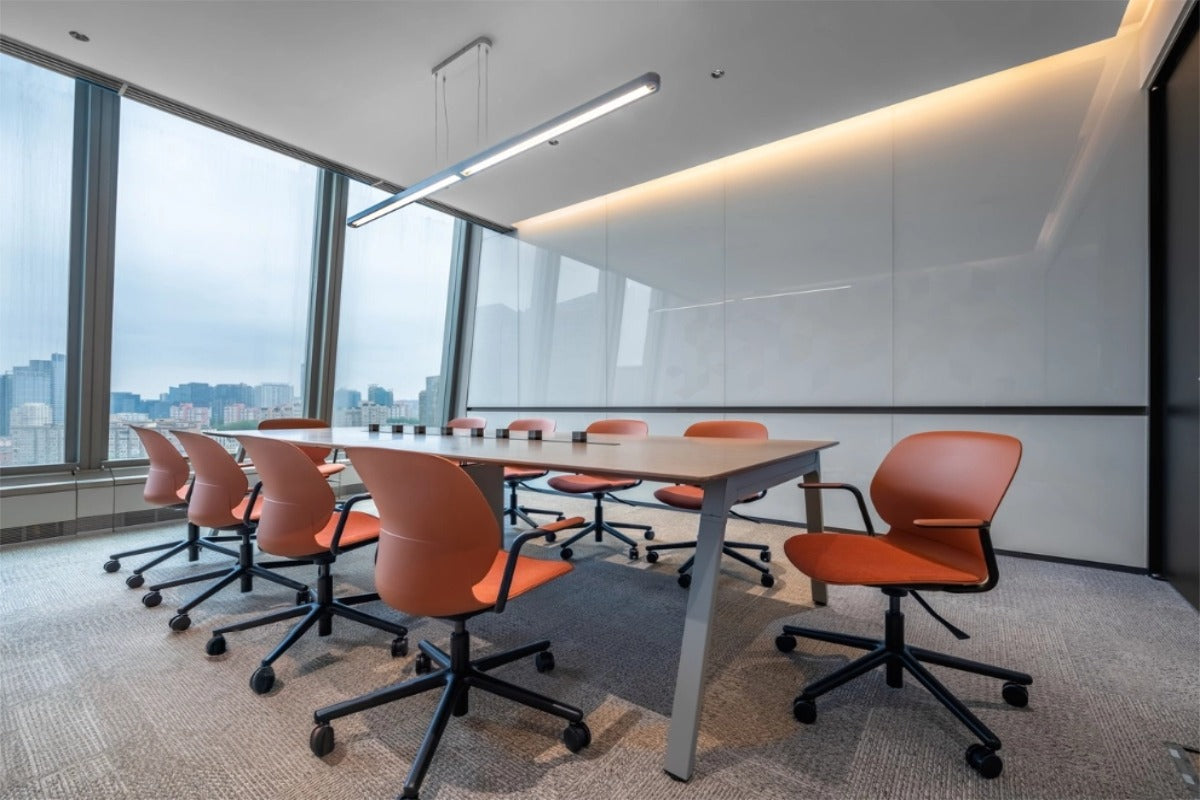
Different meeting types require different table priorities.
- Daily internal meetings focus on frequent use and easy access in and out of seats.
- Decision-making meetings often involve longer sessions, documents, and laptops, requiring more usable tabletop space.
- External meetings place greater emphasis on proportions and overall presentation, as the table contributes to first impressions.
Identifying the main meeting type helps prevent choosing a table that fits the room but not the way it is used.
2. Meeting Size Determines Table Dimensions and Layout
Meeting size directly affects how much space each person needs to work comfortably.
Practical space guidelines (reference values)
- Width per person: 600–700 mm
- Minimum tabletop depth: 800 mm for basic use, 900 mm or more for laptops and documents
Meeting size planning overview
| Meeting Size | Common Issue | Table Planning Focus |
|---|---|---|
| 4–6 people | Oversized appearance | Balanced proportions |
| 6–10 people | Limited working space | Adequate depth |
| 10+ people | Poor circulation | Clear layout |
A well-sized table supports both seating and active use, not just capacity.

3. Functional Needs Influence Table Structure and Usability
Conference tables support more than seating—they support work.
- Reviewing documents
- Using laptops or tablets
- Writing and note-taking
Buyer self-check points:
- Is the tabletop deep enough to place documents and a laptop side by side without blocking sightlines?
- Is the under-table space clear, without structural elements that restrict legroom?
Insufficient depth or restricted leg space quickly reduces comfort during longer meetings.
4. Room Size and Clearance Determine Whether the Table Truly Works
Room dimensions are critical when assessing whether a conference table will function well in daily use.
Key clearance references
- Typical chair depth: 500–550 mm
- Chair pulled out: 800–900 mm
- Minimum circulation space: 600 mm
- Comfortable circulation space: 800–1000 mm
Practical planning rule:
Table edge + chair clearance + walking space ≈ 1400–1800 mm
If this clearance cannot be achieved, movement around the table will feel restricted even if the table size seems correct.
5. Use Scenario Influences Style and Visual Weight
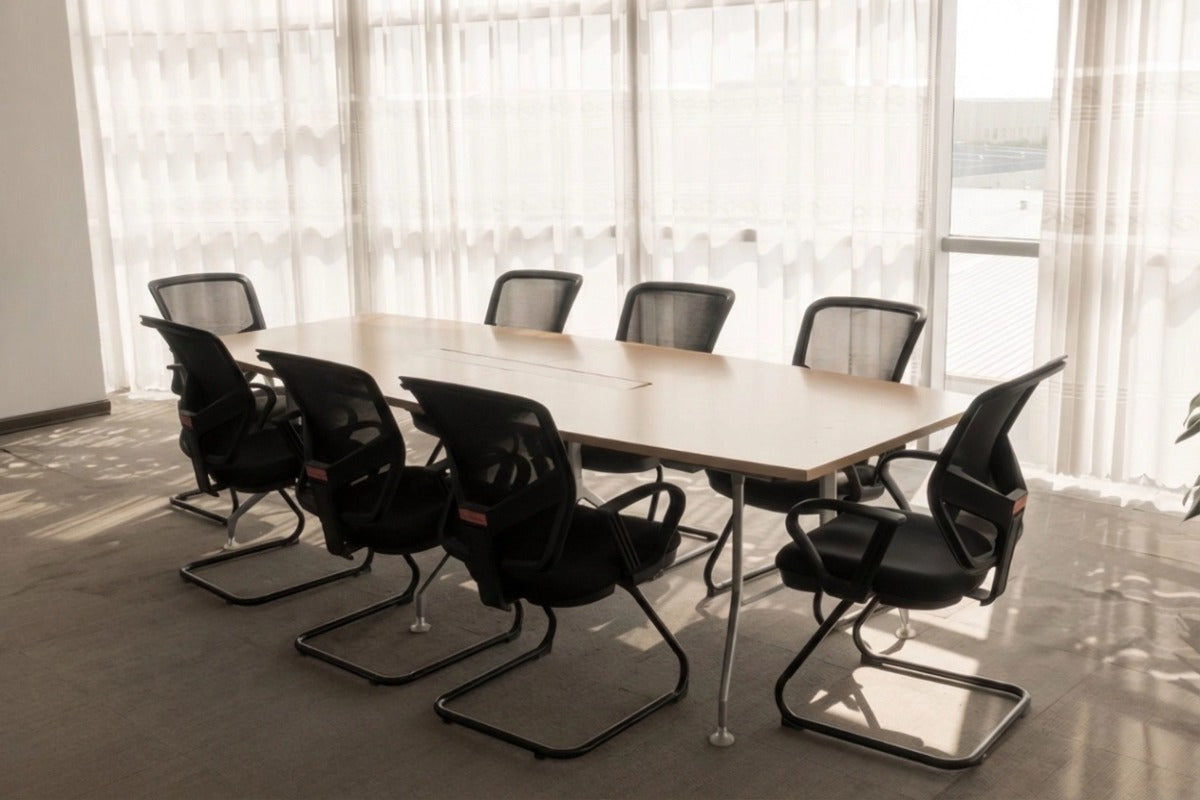
The visual role of a conference table depends on how the room is used.
- External-facing meeting rooms: Proportions, symmetry, and visual balance shape first impressions.
- Internal meeting rooms: Practicality and long-term comfort matter more than visual impact.
Style choices should follow function, not the other way around.
At CaGu MoDu, we understand that selecting the right conference table requires careful consideration of meeting dynamics, room dimensions, and functional needs. Our team is committed to helping you find conference tables that balance professional appearance with practical usability. For personalized recommendations based on your specific meeting scenarios and space requirements, please contact us through our website.
Conclusion
Selecting the right conference table starts with understanding how meetings are held, how many people attend, and how the space is used. By aligning meeting type, table dimensions, functional needs, and room clearance, buyers can avoid common mistakes and ensure long-term usability.
A well-chosen conference table supports meetings quietly and effectively—without drawing attention to limitations.