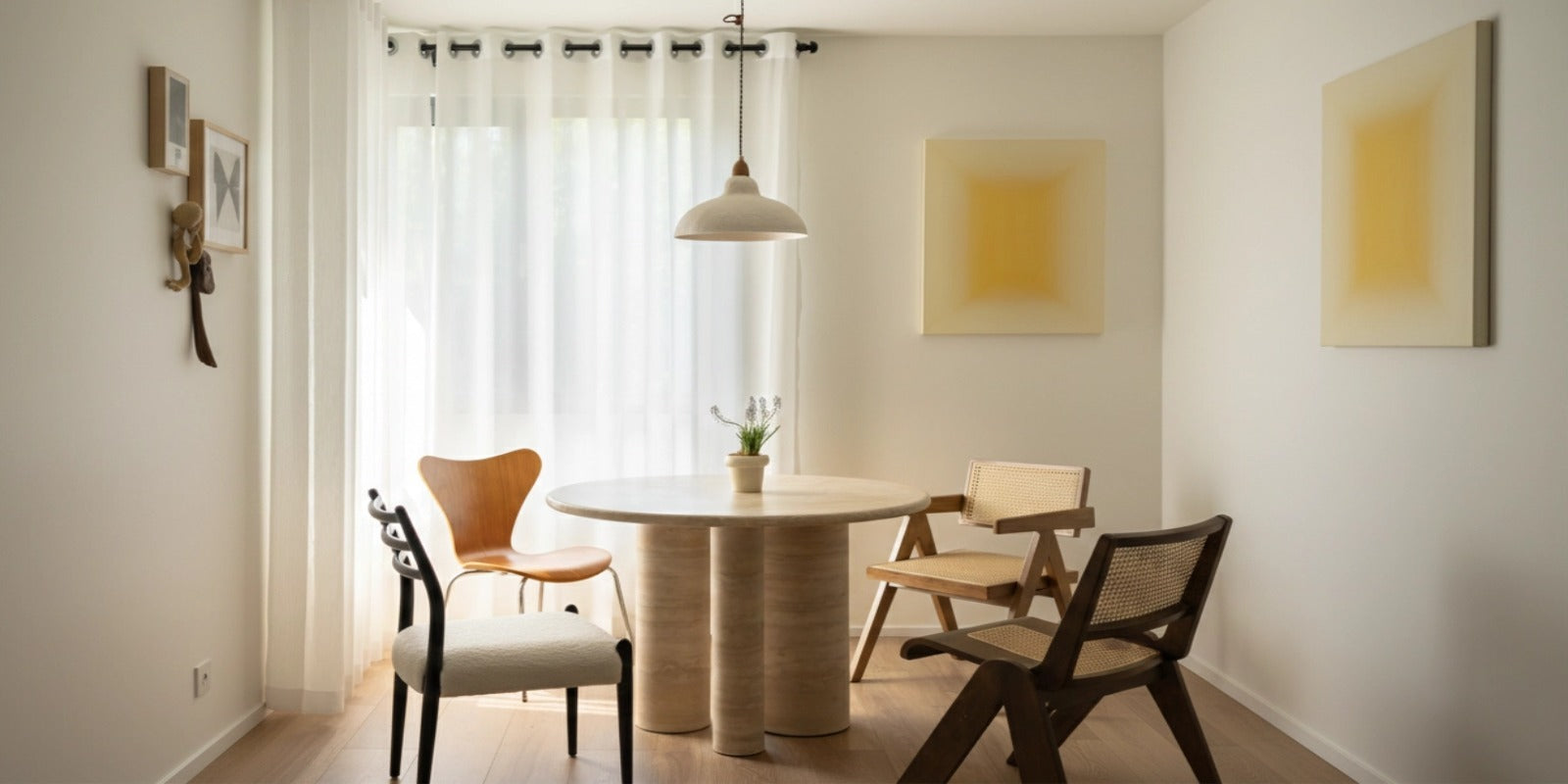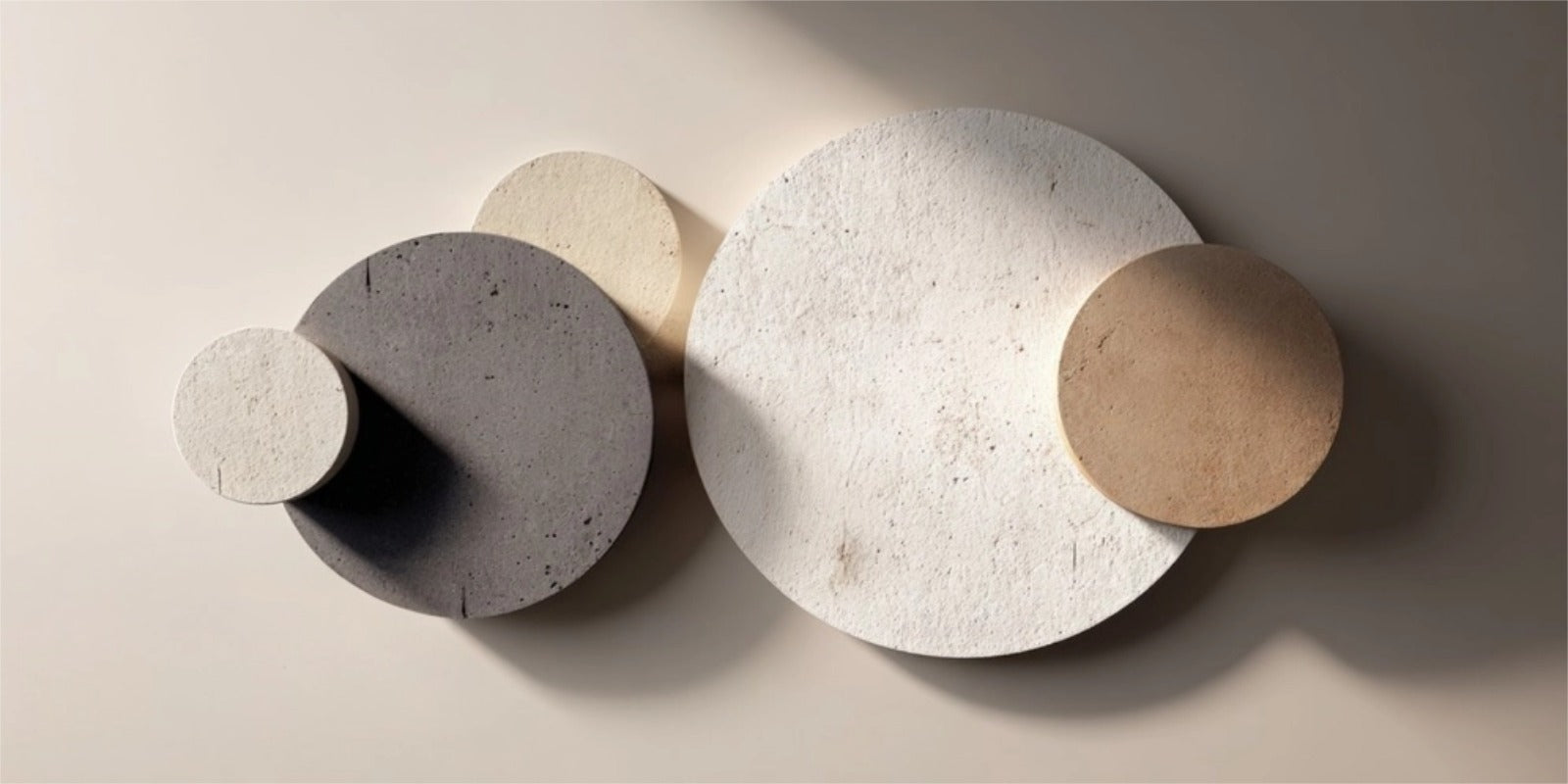
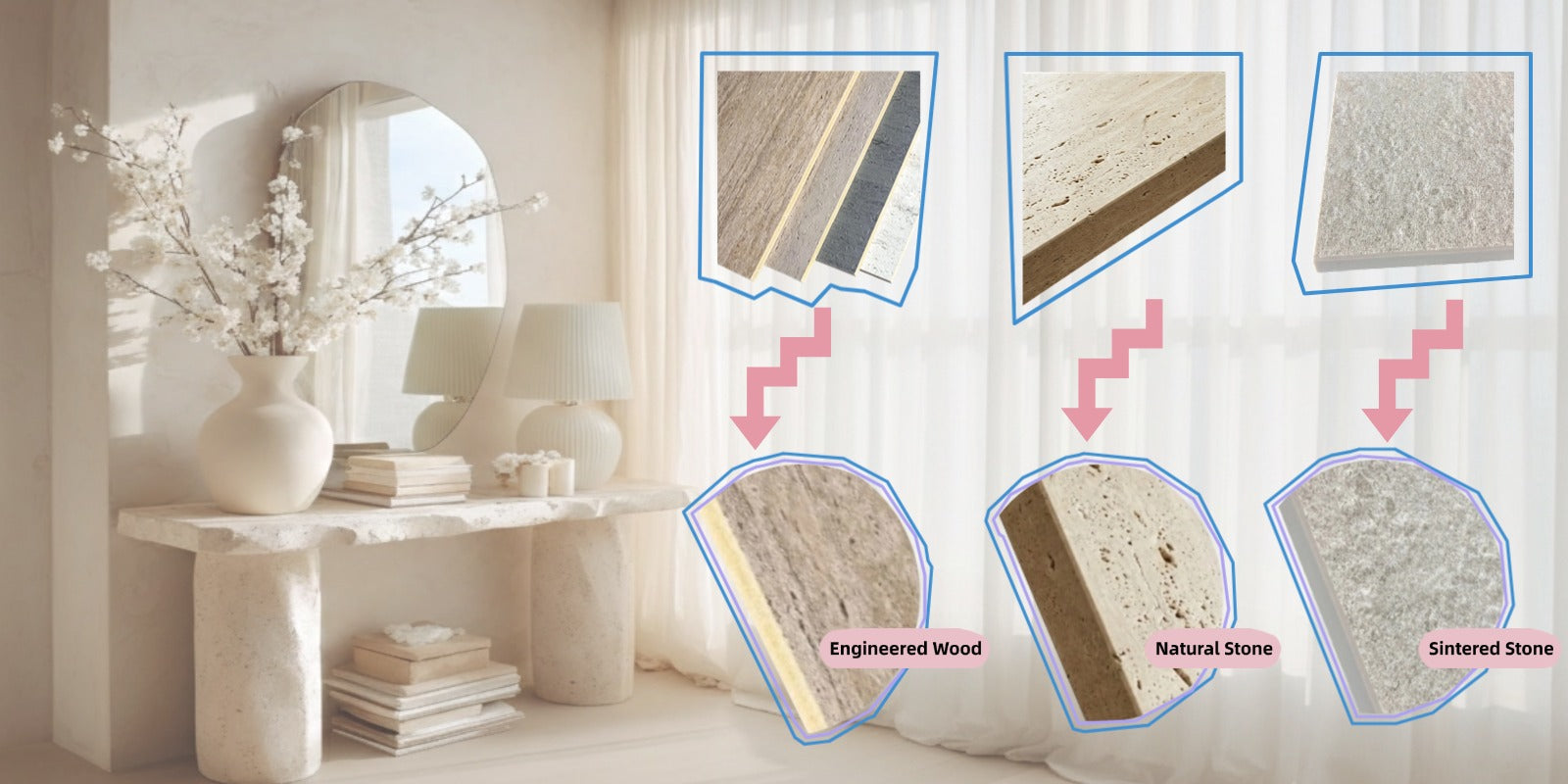
In furniture and interior design, engineered board, sintered stone, and natural stone are three commonly used material systems.While different materials may appear visually similar on the surface, their internal structure, performance, maintenance requirements, and long-term use can vary significantly. Understanding these differences is essential when choosing materials for everyday furniture and interior applications.
IN THIS ARTICLE
1. Travertine as an Example Material
2. Travertine Material Comparison
In this article, travertine is used as a representative example to explain how these three material types differ in construction, appearance, durability, and practical use. By comparing engineered travertine board, sintered stone travertine, and natural travertine, we aim to provide a clear, material-focused reference for informed decision-making.
1. Travertine as an Example Material
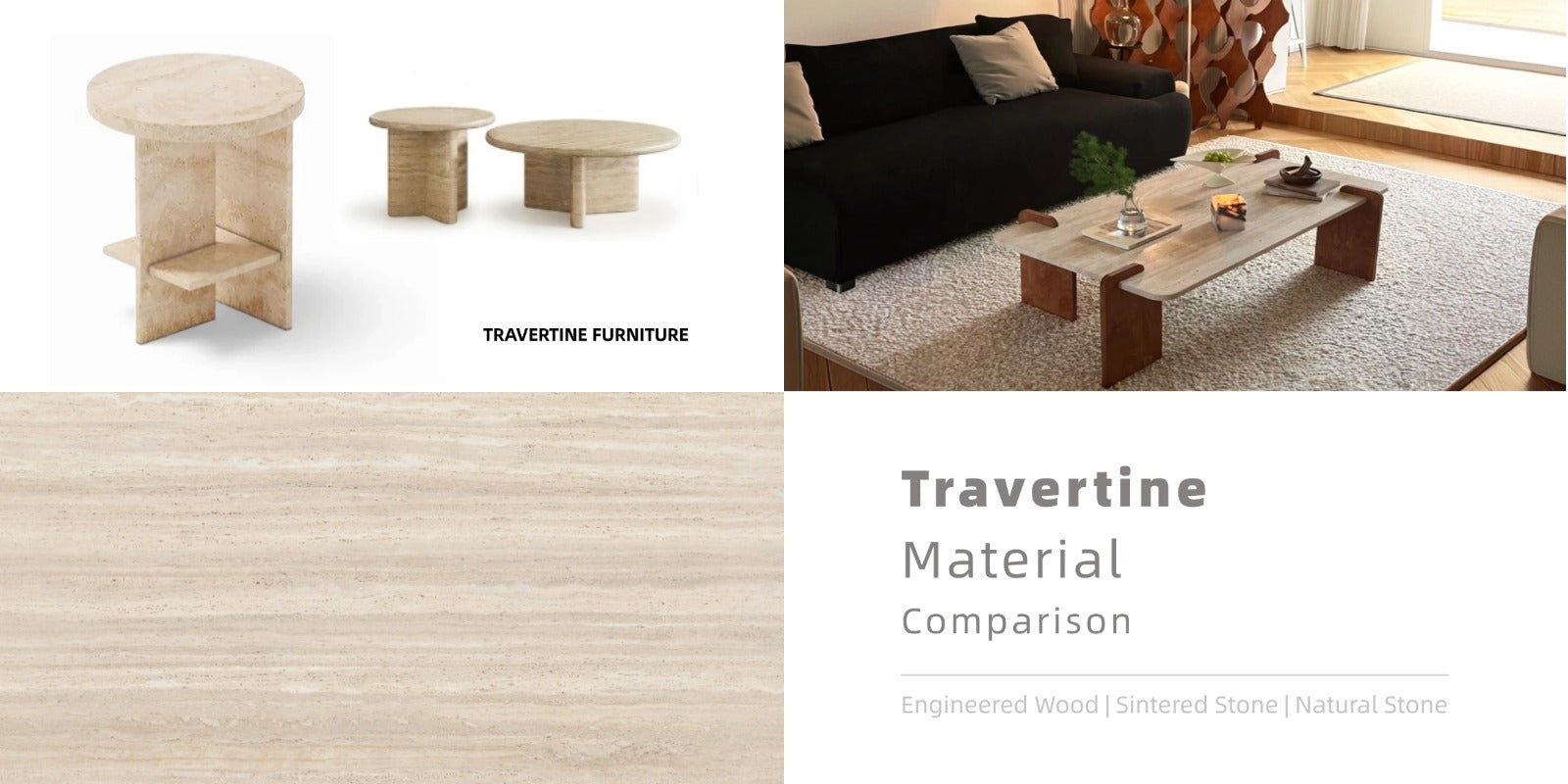
Travertine is used here as a representative material example to help explain how different material bases—engineered board, sintered stone, and natural stone—affect surface texture, performance, maintenance, and suitability for furniture use.
Natural travertine is porous and uneven, requiring regular maintenance and careful cleaning. In contrast, engineered board or sintered stone travertine can sometimes be manufactured with a smooth surface to retain the travertine look while improving cleanability. Some designs may preserve the natural texture for aesthetic effect.
1.1 Common Uses of Travertine Materials
- Furniture surfaces: Tabletops, cabinet tops, decorative panels
- Wall finishes: Feature walls, wainscoting
- Architectural applications: Flooring, bathroom walls, entryways
- Small home items: Trays, decorative objects, storage boxes
Because natural travertine is porous and absorbs water, sealing or waxing is recommended. For a balance of aesthetics and durability, many products replicate travertine textures using engineered board or sintered stone.
1.2 Why Material Knowledge Matters
Understanding travertine materials helps determine the right choice for your project:
- Engineered board travertine: Wood-based panel with travertine texture (soft veneer or printed pattern), lightweight and easy to work with, ideal for lightly used furniture surfaces or decorative panels.
- Sintered stone travertine: Stone-based engineered panels with travertine texture, durable, heat- and water-resistant, suitable for high-use surfaces.
- Natural travertine: Solid stone with unique patterns, premium appearance, heavier, higher maintenance, higher cost.
Knowing the natural and engineered options allows homeowners and designers to match materials to use-case, style, and maintenance preferences.
2. Travertine Material Comparison: Engineered Board, Sintered Stone, and Natural Stone
2.1 Engineered Board Travertine
- Material composition: Wood-based panel with travertine texture (soft veneer or printed pattern)
-
Advantages:
- Lightweight, cost-effective, easy to work with
- Can be cut, drilled, and customised
- Smooth, warm feel while visually mimicking travertine
- Surface can be treated flat for easier cleaning
-
Limitations:
- Not heat- or heavy-load resistant
- Sensitive to moisture
-
Applications:
- Furniture surfaces (tables, cabinets, panels)
- Decorative panels and partitions
- Light-use areas prioritising aesthetic appeal
Most "soft travertine" products are engineered board, using veneers or printed films to mimic the texture. Structural performance is dependent on the wood substrate.
2.2 Sintered Stone Travertine
- Material composition: Stone-based engineered panel with travertine texture
-
Advantages:
- Hard, scratch-resistant, heat-resistant, waterproof, stain-resistant
- Natural-looking texture, solid touch
- High durability, suitable for heavy-use areas
- Can be treated to fill pores for a flat, cleanable surface
-
Limitations:
- Heavy, requires structural support
- Higher production cost
-
Applications:
- Furniture surfaces, wall panels
- Long-lasting installations and high-traffic areas
Sintered stone combines aesthetics with durability, making it ideal for functional yet stylish surfaces.
2.3 Natural Travertine
- Material composition: Solid natural travertine stone
-
Advantages:
- Unique, natural patterns; each piece is distinctive
- Premium appearance and high-end feel
-
Limitations:
- Porous and uneven, requires regular maintenance
- Heavy and complex to install
- Higher cost
-
Applications:
- Premium furniture surfaces, feature walls
- Spaces where authentic natural texture is desired
2.4 Travertine Material Comparison Table
| Feature | Engineered Board | Sintered Stone | Natural Travertine |
|---|---|---|---|
| Material Base | Wood-based panel | Stone-based engineered panel | Solid natural travertine |
| Surface Texture | Travertine look | Travertine look | Natural pattern |
| Touch / Feel | Warm, smooth | Cold, hard | Cold, rich texture |
| Surface Flatness | Can be manufactured flat | Can be manufactured flat | Uneven and porous |
| Heat Resistance | Low | High | Needs protection |
| Water Resistance | Low | High | Needs sealing |
| Customisation | High | Medium | Low |
| Weight | Light–Medium | Heavy | Very heavy |
| Cost | Low | Medium–High | High |
| Suitable Applications | Light-use furniture / decorative panels | High-use furniture / wall panels | Premium furniture / feature walls |
2.5 Summary of Material Differences
- Engineered board travertine: Lightweight, easy to work with, visually appealing; suitable for light-use furniture and décor
- Sintered stone travertine: Durable and aesthetic; ideal for high-use furniture and panels
- Natural travertine: Unique, premium, textured; requires maintenance and higher investment
Selecting the right travertine material requires evaluating both usage and cleaning requirements.
3. How to Choose the Right Travertine Material
-
Light-use / Home Décor:
- Engineered board is best: lightweight, easy to customise
- Flat surface for easier cleaning
- Avoid heat or prolonged moisture
-
High-use / Durability Requirements:
- Sintered stone: durable, waterproof, stain-resistant
- Can be flat for easy cleaning
- Consider weight and structural support
-
Premium Natural Look / Unique Aesthetic:
- Natural travertine: authentic texture and premium feel
- Uneven surface, regular maintenance needed
- Professional installation recommended, higher cost
Key principle: Match material choice to intended use, maintenance capacity, and style preference.
With a clear understanding of travertine material options, choosing the right product becomes easier. Explore CaGu MoDu’s travertine selections to find thoughtfully designed pieces that combine material performance with refined aesthetics.
Shop Now4. Conclusion
Travertine-inspired surfaces bring natural elegance to furniture and interiors, but the underlying material system determines performance, maintenance, and longevity.
By comparing engineered board, sintered stone, and natural stone through the example of travertine finishes, it becomes clear that similar appearances can conceal very different material properties. Making the right choice ensures that furniture and interior elements remain both visually refined and practically suited to everyday living.
Explore our curated material selections to find solutions that balance aesthetics, durability, and functionality for your space.